


According to statistics, back pain is quite common.This is proven by the fact that about 80% of the population has experienced discomfort in the belt area at least once in their life.It is also known that one of the main symptoms of a wide range of diseases is lower back pain.Some experts believe that discomfort in this area of the spine is a kind of punishment for a person for walking straight.
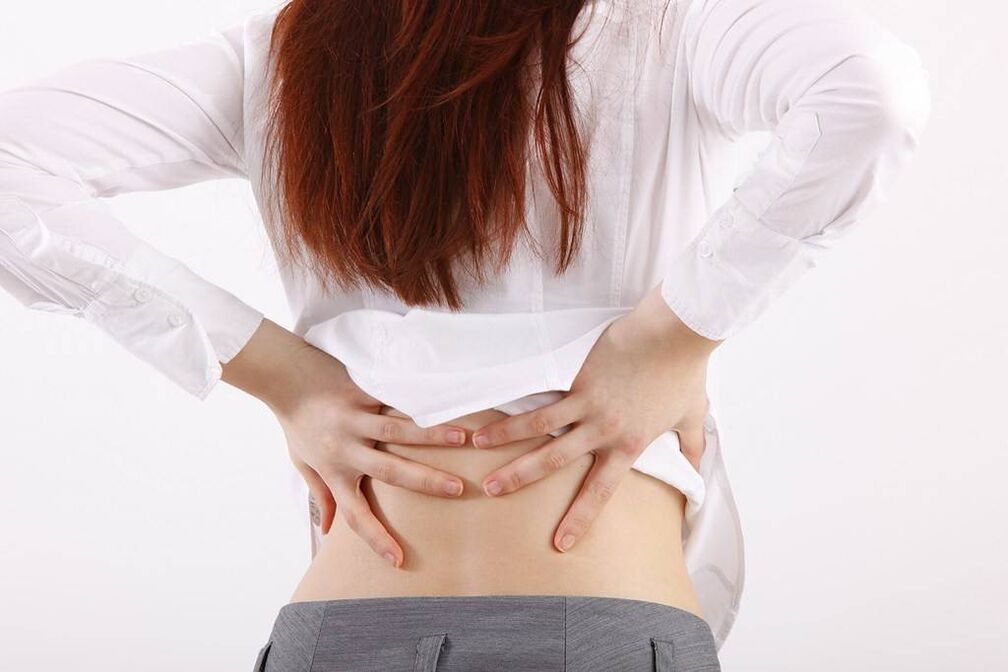
For the most part, as long as the pain in the lumbar region is not strong or constant, but appears periodically, people are not inclined to pay attention to it and go to the doctor.As a result, anxiety usually increases and becomes chronic.In a meeting with a specialist, it turns out that the cause of the concern is a serious illness that requires surgical therapy.
As a rule, acute low back pain turns into constant pain over time.According to neurologists, within the next year after recovery, a relapse occurs in 40% of patients, while in the long term, discomfort returns in 85% of patients.
Types of lower back pain
For some people, lower back problems become so common that they don't even notice them.In general, unpleasant sensations in the lower back can be observed in a person once, and then they do not happen again.
Or they may return repeatedly, causing tremendous suffering.But, before visiting a doctor, you can determine from the symptoms of the painful syndrome and its localization which disease is caused.
There are five types of back pain:
- premises;
- reflected;
- reflected spondylogenic (pathological);
- radicular;
- caused by muscle spasm.
Local and referred pain in the lower back
Local localization of pain occurs as a result of irritation or compression of sensitive nerve endings.It is caused by breaking, tearing or straining the sensitive fibers.Unpleasant sensations of a local nature that do not change in strength when changing the position of the body suggest the presence of a tumor or infection of the spine.
The source of referred pain, which is felt in the lower back, can be problems with the abdominal or pelvic organs.Very often, but not always, the pain is localized not only in the lower back, but also in the abdomen and pelvis.When the spine moves, the unpleasant sensations do not increase, but no special relief is felt either.
Referred spondylogenic pain in the case of upper lumbar spine injury is felt in the lower back, in the hip area, or on the front surface of the thighs.When the pathology affects the lower back, discomfort usually appears in the buttocks, the back of the thighs and in rare cases in the calves or legs.
Sharp pains and cramps
Classic discomfort in the lower part of the spine of radicular origin is usually characterized by severity and spreads to the legs.
Often back pain when coughing is provoked by coughing, sneezing or other tension in the abdominal muscle tissue.This happens due to the tension of the affected root or nerve during a certain position or movement of the body.
Thus, lower back pain when sitting occurs due to tension on the sciatic nerve (L5 and S1 roots react) running along the back of the thigh.The very nature of the sensations usually does not make it possible to distinguish radicular pain from non-radicular pain.What causes the discomfort of muscle spasms is usually not clear.Pain appears with various diseases of the spine.During a spasm, the spine bends, the deep back muscles tense and a dull ache appears.
Often discomfort in the lower back appears due to spinal pathology.In some cases, it can be caused by damage to the kidneys, pancreas and lumbar muscle tissue.The cause of the pain is usually determined by a neurologist.If necessary, a therapist and orthopedist are involved.
Common causes of back pain
Doctors recommend paying attention to the discomfort in the lower back, mainly because it can be one of the symptoms of a number of serious diseases.The nature of the manifestation of the lumbar syndrome simply depends on the reasons that caused it.Only a specialist can determine the "source" of the pain, as well as what disease may have caused the discomfort in the lumbar region.
Causes of persistent back pain:
- cholelithiasis;
- pancreatitis;
- prostatitis;
- inflammatory diseases of the pelvic organs;
- benign and malignant tumors of the pelvic organs;
- stomach and duodenal ulcers;
- aortic aneurysm;
- kidney stones or urinary tract infections.
Causes of pain related to the spine and back muscles
In medicine, there are a number of rather rare pathologies of the spine that can cause lumbar syndrome.Among such diseases, ankylosing spondylitis stands out, when the joints of the spine become inflamed.Also, pain in the spine in the lumbar region can be caused by a bacterial infection, osteomyelitis.
In 90% of cases, lumbar syndrome is caused by various problems with the spine and back muscle tissue.In this regard, the most common causes of pain are:
- degenerative-dystrophic diseases of the spine (osteochondrosis, deforming spondylosis, progressive osteoarthritis, intervertebral disc herniation);
- severe strain of the lower back muscles;
- complex fractures of the spine - traumatic or compression.
On its own in this list of reasons is psychosomatics - back pain, according to this direction in medicine, is caused by psychological problems.For example, the inability to find the true purpose, a very heavy burden (taking care of a sick relative, a small child, problems in the family, etc.).In this case, working on yourself will help.
Provocative factors
In the case of a significant number of diseases of the spine and damage to the nerve roots, discomfort in the lower back can be observed.
However, these diseases can occur for a long time without manifestations.Only under the influence of certain factors do they make themselves felt.Therefore, it is necessary to eliminate not only the unpleasant sensations, but also the underlying disease.
Factors that contribute to low back pain:
- not knowing the rules of lifting weights;
- lack of physical activity;
- hormonal imbalance;
- the use of uncomfortable furniture (chairs, armchairs, etc.);
- wrong attitude.
Hypothermia, changes in atmospheric pressure and magnetic storms can also cause lower back pain.In any case, the sensitive nerve roots of the spinal cord are irritated.It can also be observed due to pathological deposits of calcium salts.Spinal hernias and protrusions (bulging intervertebral discs) can also cause tailbone and lower back pain.
Pain in the lower back: symptoms
Each disease has its own symptoms, but with lumbar syndrome, the symptoms appear depending on the reasons that caused the discomfort in the lower back.For example, acute discomfort may be a consequence of renal colic.In this case, a person will not be able to find a body position that would allow him to endure discomfort.
Pain in the lower back and groin is sometimes a reflection of the movement of a stone from the renal pelvis to the ureter.When the fifth vertebra is displaced, pain with severe weakness can be felt not only in the lumbar region, but also in the hips and legs.
It is difficult for a person to move, as the syndrome only intensifies and becomes unbearable.The disease itself is called spondylolisthesis.
Middle-aged women often experience pain in the lower back after sleep, as well as weakness in the morning.In addition, there is passivity of the spine and discomfort along it.Such symptoms are characteristic of fibrositis.When the disease is advanced, the pain in the lower back during movement becomes quite strong, since the fibrous connective tissue, when inflamed, reacts very sensitively to the movement of the human body.
Lumbar syndrome deserves special consideration, considering the sides of the body:
- pain in the right region of the lumbar region is a sign of problems in the sexual sphere, as well as a signal of pathology of the right kidney, abdominal wall, intestines or cecum appendix;
- discomfort on the left side of the lumbar region is a sign of diseases of the reproductive system, problems with the ureter, left kidney, hernia, intestines, abdominal walls.
Back pain treatment
It happens that back pain during a cold, as well as for other reasons, is so strong that it is impossible to do without therapy.Regardless of what caused the attack, it is recommended to stay in bed for the first few days.If the discomfort in the lower part of the spine is caused by a sprain, then a heating pad or a warm bath will help improve your well-being.If the injury is serious, consult a doctor immediately.
Conservative therapy
Irritant ointments, as well as mustard plasters or pepper plasters will help to perform local heating of the midsection in the area of greatest pain.
Wrapping yourself in a warm woolen scarf, applying an electric heating pad, a bag of heated sand and leeches will provide relief.Hot compresses help with myositis.
Depending on the parallel symptoms that are observed, back pain can be relieved through electrical procedures: diadynamic current, transcutaneous electroanalgesia, sinusoidally modulated currents, novocaine electrophoresis and others.Reflexology (acupuncture, moxibustion, electroacupuncture, laser therapy), including novocaine blocks, will also help relieve discomfort.
For radiculitis caused by displacement of intervertebral discs, traction therapy is prescribed - lying on the torso in bed or under water.Similar procedures are performed in a hospital setting.Balneotherapy is also known to be effective.These are radon, sulfide, chloride, sodium, turpentine, iodine-bromine baths, clay applications at low temperature, naphthalene.
Rubbing with anti-inflammatories and sedatives is quite effective for lumbar syndrome.You can ease the pain and irrigate the affected area with ethyl chloride.
Preventing
Of no small importance in eliminating lumbar syndrome and preventing its attacks is the maintenance of external support systems - orthoses.
At the doctor's discretion, this can be a corset, a half corset, a posture corrector or a support (special corset that eliminates tilting) or a bandage.Sometimes belts are recommended: corset, anti-radiculitis, elastic and others.
Only one universal remedy will help relieve back pain after sitting and prevent the development of lumbar syndrome - physical therapy (or yoga - a set of exercises to improve health).It is also important to monitor your posture when sitting, and when your lower back becomes stiff, do light exercises.Massage will help a lot.It will relieve muscle spasms and bring the muscles to the right tone.
In general, back pain can have a number of causes.It is important not to ignore the symptoms and go to the clinic on time.Prophylaxis will prolong the achieved effect of treatment.Therefore, then you should not carry heavy items and fully adhere to the doctor's recommendations.Then, perhaps, the pain in the lumbar region will never appear again.